Why are my peaks tailing, fronting, splitting, or broad?
This guide explains the most frequent causes of poor HPLC peak shape related to column condition, chemistry, and injection technique.
Executive Overview
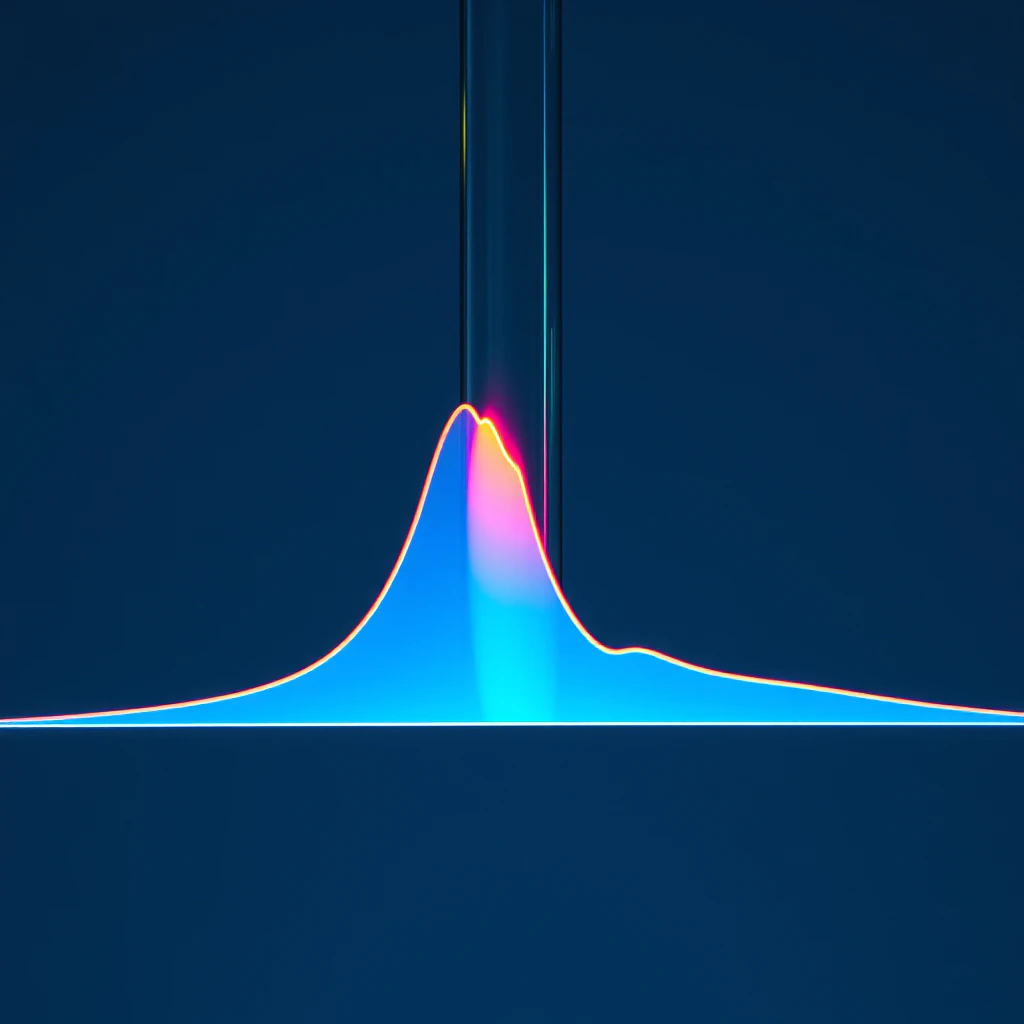
Chromatographic peak shape is one of the fastest diagnostic indicators of separation health. When peaks deviate from the ideal Gaussian profile—showing tailing, fronting, splitting/shouldering, or broadening—the cause is usually an interaction among sample properties, stationary phase chemistry, mobile phase conditions, injection strategy, instrument hardware (extra-column volume), and detector/data acquisition.
This technical troubleshooting guide provides symptom-driven root causes and corrective actions for:
LC (HPLC/UHPLC) with UV/DAD and LC–MS considerations
GC with FID/TCD/ECD and GC–MS considerations
Peak shape problems are rarely caused by a single factor. Work systematically: isolate contributions from the sample, method, column, hardware, and detector.
Quick Symptom–Cause Snapshot (Search-Friendly)
Peak Tailing (As > 1, TF > 1)
Common causes:
Secondary interactions (active sites, adsorption)
pH/ionization mismatch (LC)
Column fouling or partial blockage
Dead volume, poor fittings, extra-column dispersion
Peak Fronting (As < 1)
Common causes:
Column or detector overload
Injection solvent too strong (LC)
Leaks/voids
Inlet problems or excessive splitless exposure (GC)
Peak Splitting / Shouldering
Common causes:
Solvent mismatch and poor focusing (LC)
Column void/channeling
Co-elution or analyte interconversion
Inlet pathway issues (GC) or gradient delay artifacts (LC)
Peak Broadening (loss of efficiency)
Common causes:
Extra-column dispersion (tubing, fittings, detector cell volume)
Non-optimal flow/temperature (Van Deemter effects)
Mass transfer limits at high velocity
Aged/fouled column
Detector sampling rate too low or time constant too long
Peak Shape Metrics You Should Track
Tracking objective metrics prevents “guessing” and helps confirm improvements after changes.
Asymmetry Factor (As)
Typically measured at 10% peak height
Target range: ~0.9–1.2
>1.2 suggests tailing
<0.9 suggests fronting
USP Tailing Factor (TF)
Typically measured at 5% peak height
Typical target: 0.9–1.5
Plate Number (N) and Efficiency Trends
Decreasing N over time often indicates:
Column aging/fouling
Increased extra-column dispersion
Instrument or detector configuration drift
Flow/Velocity Dependence (Van Deemter Context)
Peak broadening often reflects combined effects of:
A term (eddy dispersion)
B term (longitudinal diffusion at low flow)
C term (mass transfer resistance at high flow)
plus extra-column variance (hardware/detector)
The Core Diagnostic Strategy
Before changing multiple variables, isolate the major contributor:
Injection and focusing (sample solvent vs mobile phase, injection volume/mass)
Column chemistry and condition (active sites, fouling, voids)
Hardware and plumbing (dead volume, tubing ID/length, fittings, leaks)
Method variables (pH, ionic strength, flow, temperature, gradient shape)
Detector and acquisition (sampling rate, time constant, cell volume)
Root Causes and Corrective Actions (By Category)
1) Column Chemistry and Column Condition
Active Sites and Secondary Interactions (Peak Tailing)
Common in LC when analytes interact with:
Residual silanols on silica-based RP phases (notably for basic analytes)
Metal surfaces that interact with chelating compounds
Corrective actions
Use end-capped, base-deactivated columns; consider polar-embedded phases for basic compounds.
Use mobile phase modifiers where appropriate:
Add triethylamine (0.05–0.1%) to reduce tailing of basic analytes
Use acids (e.g., TFA or formic acid (0.05–0.1%)) to influence ionization/interaction patternsFor metal-sensitive analytes: consider a metal-free flow path or an EDTA wash strategy where appropriate to reduce metal interactions.
Column Fouling / Contamination (Tailing + Broadening)
Symptoms
Progressive worsening over time
Late-eluting peaks degrade first
Corrective actions
Regenerate by flushing strong solvent sequences compatible with your method (example sequence from your text: H₂O → MeOH → ACN → buffer → ACN).
Install a guard column; replace when pressure increases or peak shapes deteriorate.
Column Voids or Channeling (Splitting + Sudden Changes)
Symptoms
Peak splitting, new shoulders, asymmetry changes with flow
Often appears suddenly after a pressure event or particulate load
Corrective actions
Inspect column head frit; reverse-flush where appropriate to clear particulates.
Replace column if a void is suspected.
Ensure correct installation and properly seated frits.
Column Overload (Fronting)
Symptoms
Fronting and plateauing
Often worsens as injected mass increases
Corrective actions
Reduce injected mass/volume.
Increase column capacity (larger ID/length or higher loading capacity phase).
Optimize sample solvent strength and pH to reduce strong adsorption at the column inlet.
2) Sample and Injection Solvent Effects
Strong Injection Solvent and Poor Focusing (Fronting or Splitting in LC)
Mechanism
If the injection solvent is stronger than the initial mobile phase—especially in gradients—analytes may not focus at the head of the column.
Corrective actions
Dissolve the sample in initial mobile phase or a slightly weaker solvent.
Reduce injection volume.
Match sample pH to mobile phase pH to maintain intended ionization state.
Sample Matrix Issues and Precipitation (Broadening, Tailing, Splitting)
Symptoms
Broad peaks, distorted shape, inconsistent retention
Can occur with viscosity/ionic strength mismatch
Corrective actions
Filter samples.
Adjust ionic strength to avoid salting-out and precipitation.
Avoid matrix conditions that destabilize the analyte in solution.
GC Solvent Expansion and Vaporization Problems (Splitting, Fronting)
Corrective actions
Set inlet temperature sufficiently above the solvent boiling point.
Optimize split ratio and splitless timing.
Use appropriate deactivated liners (with wool if needed) and reduce injection volume when necessary.
3) Instrument Hardware and Plumbing (Extra-Column Effects)
Dead Volume and Mismatched Fittings (Broadening and Tailing in LC)
This is a dominant cause of peak distortion in UHPLC, where system dispersion can easily overpower column efficiency.
Corrective actions
Use zero-dead-volume (ZDV) unions and correctly seated ferrules.
Use tubing ID appropriate to the system (small ID for UHPLC).
Minimize detector cell volume where possible and shorten connecting tubing.
Leaks and Partial Blockages
Symptoms
Leaks may present as fronting and unstable response
Blockages may present as tailing/broadening, pressure changes, or baseline instability
Corrective actions
Pressure-test the system.
Inspect autosampler rotor seals/needles; replace worn parts.
Clean/replace frits and in-line filters.
Gradient Delay and Mixing Artifacts (Splitting/Shoulders)
Mechanism
Delayed or uneven composition delivery can create shoulders or apparent splitting.
Corrective actions
Account for dwell volume.
Verify mixer function and standardize premix vs in-line mixing.
Re-time gradient relative to dwell volume.
GC Inlet/System Activity (Tailing and Splitting)
Corrective actions
Use deactivated liners/columns.
Replace inlet consumables (liner, seals) and verify split ratio accuracy.
Adjust purge flows where appropriate.
4) Method Parameters (pH, Flow, Temperature, Gradient)
pH and Ionization Control (LC)
Symptoms
Tailing when analyte is partially ionized (straddling pKa) in RP conditions
Corrective actions
Buffer to suppress unwanted ionization shifts.
Ensure adequate buffer capacity; avoid extremely low ionic strength for ionizable analytes.
Flow Rate and Linear Velocity
Symptoms
Too low flow → longitudinal diffusion broadening
Too high flow → mass transfer broadening
Corrective actions
Adjust toward the vendor-recommended optimal velocity.
Temperature
LC: raising temperature can reduce viscosity and mass transfer resistance, often improving symmetry.
GC: avoid too-cold starts that over-retain and broaden early peaks; use appropriate ramps/holds.
Gradient Shape (LC)
Steep gradients can compress peaks but increase sensitivity to dispersion.
Shallow gradients can broaden late peaks.
Corrective actions
Optimize gradient slope.
Add a weak-organic hold for focusing where appropriate.
Consider step gradients when justified.
5) Detector and Data Acquisition Artifacts
Sampling Rate and Time Constant (LC UV/DAD)
Symptoms
Peaks appear broader or “split-like” when sampling is too slow or time constant too long.
Corrective actions
Increase sampling rate (example in your text: ≥10 Hz for UHPLC).
Reduce time constant.
Use appropriate cell volume for high-efficiency separations.
LC–MS Coupling
Symptoms
Tailing or distortion due to excessive post-column volume or source effects.
Corrective actions
Minimize post-column tubing length/ID.
Ensure stable nebulization and compatible volatile buffers.
Baseline and Processing Artifacts
Symptoms
Apparent shoulders from baseline drift or integration/deconvolution settings.
Corrective actions
Stabilize lamp/source and optimize reference settings (DAD) or dwell settings (MS).
Verify integration parameters and baseline handling.
Symptom-Focused Troubleshooting Playbooks
Peak Tailing: Stepwise Fix Path
Likely causes
Secondary interactions, active sites, partial clogging, dispersion
Actions
Change to end-capped/base-deactivated column; consider polar-embedded phase.
Add triethylamine or acid modifier as appropriate.
Clean/regenerate column; replace guard; inspect frits.
Minimize dead volume and detector cell volume; shorten tubing.
Adjust pH to stabilize ionization state.
Peak Fronting: Stepwise Fix Path
Likely causes
Overload, strong injection solvent, leak/void
Actions
Reduce injection mass/volume; dilute sample; use weaker injection solvent.
Leak test and reseat/replace fittings.
Evaluate column integrity; replace if void suspected.
Peak Splitting/Shoulders: Stepwise Fix Path
Likely causes
Poor focusing, void/channeling, co-elution/interconversion, GC inlet issues
Actions
Match sample solvent and pH to starting conditions; reduce injection volume.
Inspect column/frits; replace if voided.
Evaluate analyte stability and solution equilibria; adjust temperature/pH accordingly.
For GC, select proper liner, correct inlet temperature/pressure, and optimize splitless time.
Peak Broadening: Stepwise Fix Path
Likely causes
Extra-column dispersion, suboptimal flow/temperature, aged/fouled column, acquisition settings
Actions
Reduce tubing lengths/IDs; use ZDV connections; minimize detector volume.
Adjust flow and temperature toward optimal efficiency.
Regenerate/replace column; use guard; filter samples.
Increase sampling rate; reduce time constant.
Structured Checklist (Copy/Paste for a Lab Notebook)
Sample and Injection
Dissolve in initial mobile phase (LC)
Reduce injection volume and injected mass
Match pH and ionic strength
Column
End-capped/deactivated phase where appropriate
Regeneration flush performed
Guard column installed and healthy
Check for voids/frit clogging
Hardware
ZDV unions and correctly seated fittings
Correct tubing ID and minimal length
Leak test completed
Autosampler seals/needle inspected
Method
Flow/velocity optimized
Column temperature set and stable
Buffer capacity adequate
Gradient dwell volume accounted for
Detector
Sampling rate appropriate (LC; e.g., 5–10 Hz or higher for UHPLC)
Time constant not excessive
Post-column volume minimized
MS source not overloaded
Summary
Tailing most often reflects secondary interactions or dispersion; fix with appropriate column chemistry, modifiers, and minimal dead volume.
Fronting most often indicates overload or strong injection solvent; reduce load and improve focusing.
Splitting commonly signals focusing failure, voids/channeling, or multi-species behavior; correct solvent/pH matching and verify column/inlet integrity.
Broadening arises from extra-column dispersion, non-optimal flow/temperature, mass transfer limits, column aging, or detector settings; reduce dispersion and optimize operating conditions.